
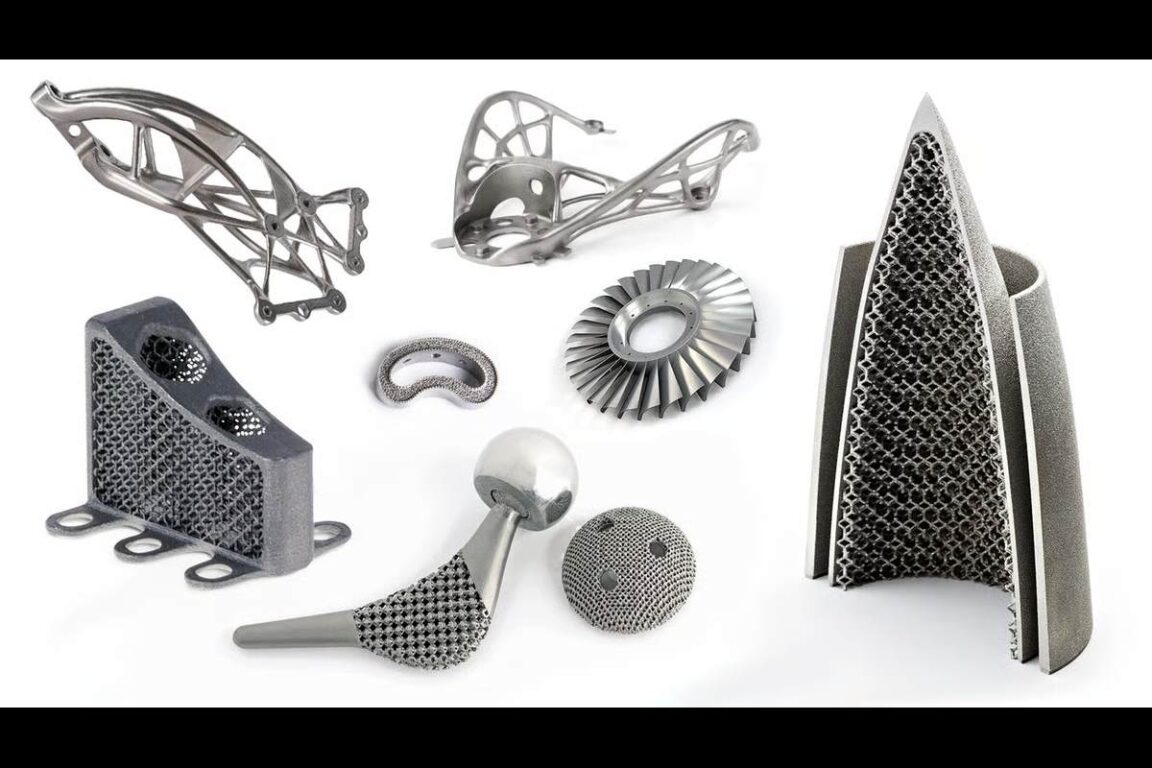
Losing a tooth in modern times is a far cry from what it was a couple of decades ago, when modern technologies such as sandblasting, acid etching, and the ‘All-on-4’ technique were still in their infancy. Today, dental implants have an impressively high success rate, with four out of every five implants surviving for over 20 years. The industry is advancing at an incredibly fast rate, with newer technologies such as 3D-printed titanium implants enabling more personalized implants for a wide array of situations.
How Are 3D-Printed Titanium Implants Different?
3D-printed implants differ from traditional ones in several ways, arguably the most important being their ability to be customized for each patient. Traditional implants, meanwhile, come in standard sizes and shapes; as a result, are less precise in matching a patient’s anatomy. A second major difference is the internal structures of traditional vs 3D-printed titanium implants. While older implants typically have a smooth metal structure, 3D-printed titanium implants can be printed with porous or lattice designs that mimic natural bone. These structures allow bone tissue to grow into the implant (in a process called osseointegration), improving long-term integration and reducing the risk of loosening. Finally, 3D-printed implants can be used to create implants for complex cases, where standard-sized implants are a poor fit.
How Are 3D-Printed Implants Created?
3D-printed implants are designed using digital imaging and planning. The journey begins with Cone Beam Computed Tomography (CBCT), which produces detailed 3D images of a patient’s oral anatomy. These scans reveal vital information, such as bone structure, density, and the positioning of nearby nerves or sinuses. Advanced 3D imaging software then converts these scans into virtual models of the patient’s mouth, allowing dentists to simulate implant placement and fine-tune factors such as angle and depth. Intraoral scanners are also used to refine the accuracy of implant design and fabrication.
What Materials Are Used in 3D Printing for Dental Implants?
Titanium metal supply is vital for 3D-printed implants, as both the metal and its alloys offer unique benefits. Titanium is unique among metals owing to its exceptional strength and natural ability to bond with bone. Another material, hydroxyapatite, closely resembles natural bone mineral, thus helping implants integrate more seamlessly with surrounding bone tissue. Zirconia, meanwhile, offers a more natural appearance. Additionally, advanced surface treatments, such as acid etching and nano-coatings, enhance cells’ ability to attach and grow on implants, boosting their longevity and success.
In What Cases Can 3D-Printed Dental Implants Be Used?
3D-printed dental implants can be particularly useful in cases of severe bone loss. Traditional implants typically cannot be fitted when bone density is low. This often occurs when a tooth has been missing for years, or when factors such as periodontal disease, trauma, tumors, or aging are present. In the past, patients’ only choice was to undergo surgery to receive bone grafts (obtained from the hip, jaw, or donor bone). Patients would then have to wait for up to a full year to receive their implant. Today, by scanning the empty tooth socket, professionals can design an implant with the identical shape of the missing root. The implant can therefore fit into irregular bone without the need to further drill bone. Implant stiffness can also be fine-tuned to match bone. If the titanium in an implant is much stiffer than bone, it tends to take all the load, leading bones to grow “lazy” and shrink. In time, implants can loosen and fall out. Porous and lattice structures help reduce the stiffness of titanium, boosting the lifespan of implants.
Integrating Multiple Functions Into One Part
3D printing can be used not only to create individual implants, but also to print multiple components of a single piece. Take the case of a patient requiring jaw reconstruction owing to cancer. They may need a titanium plate to replace the missing jawbone, dental implants screwed into the bone, separate screws to fix the plate to the skull, separate abutments to connect teeth, and a prosthetic tooth bridge. Through 3D printing, professionals can design a single titanium structure that contains all these functions.
3D-printed titanium implants are transforming dentistry by enabling highly personalized, bone-like implant designs that improve fit, integration, and outcomes—especially in complex cases. Today’s dental health professionals and engineers are combining advanced imaging, digital design, and additive manufacturing to create implants with customized geometry, stiffness, and surface properties. While traditional implants remain highly successful, 3D printing opens the door to more precise, integrated, and innovative solutions for the future of dental care.