
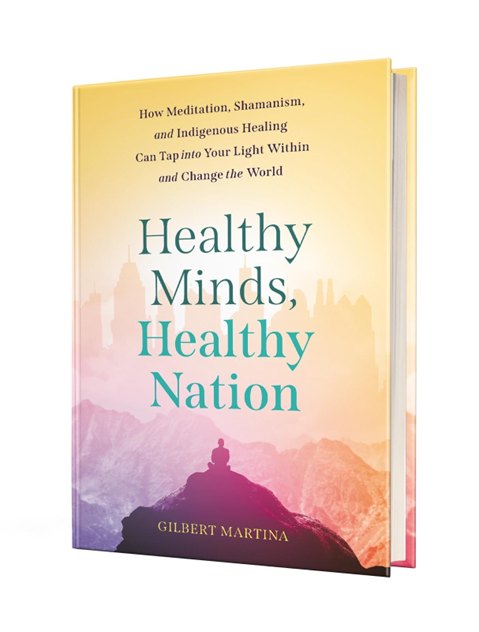
Healthy Minds, Healthy Nation – How leadership, identity, and long-term alignment shaped an overlooked nation and offered a broader lesson in community wellbeing
When Curaçao qualified for the World Cup, the achievement surprised much of the world. With a population smaller than many cities, limited resources, and little international attention, the island was not widely seen as a contender on a global stage. But for Gilbert Martina, President of the Curaçao Football Federation, the qualification itself was never the most important part of the story.
What mattered was what the moment revealed beneath the result.
For Martina, Curaçao’s rise was not the product of a single match, a lucky break, or a sudden surge of performance. It was the visible outcome of something that had been developing quietly for decades. A collective mindset shaped by shared purpose, trust, and long-term responsibility. The World Cup did not create that foundation. It exposed it.
Rather than viewing Curaçao through the familiar lenses of size or limitation, the moment highlighted a deeper alignment across leadership, culture, and community. What appeared miraculous to outsiders felt, from within, like the natural expression of years of intentional work.
From individual wellbeing to collective outcomes
At the center of Martina’s leadership philosophy is a belief that healthy systems are built the same way healthy individuals are built. Through consistency, accountability, and environments that support people rather than exhaust them.
In Curaçao, that belief shaped decisions far beyond sport. Leadership focused less on chasing outcomes and more on reinforcing values at every level. People were encouraged to see themselves as part of something larger, responsible not only for performance but for one another.
When individual wellbeing is treated as a collective concern rather than a private one, Martina argues, behavior changes. Teams become more cohesive. Institutions stabilize. Communities respond to pressure with clarity rather than fragmentation. When our individual purpose is in service of a larger purpose, magical things happen because we start co-creating beauty with the universe, it’s no longer about “me” but it becomes a matter of “us”, a matter of general interest rather than personal interest. Life becomes effortless.
These ideas form the foundation of Healthy Minds, Healthy Nation, a book that reflects on how leadership choices at the individual level compound into cultural and national outcomes over time.
Curaçao as a case study in intentional leadership
Curaçao occupies a unique cultural and historical position. As a small island with a complex colonial past, it has long existed at the edges of global narratives. That reality left little room for waste, fragmentation, or short-term thinking.
Rather than seeing those constraints as disadvantages, leadership treated them as a responsibility. Decisions emphasized long-term development, cultural identity, and trust across systems. Progress was measured not only in visible results, but in how people showed up for one another during periods of uncertainty.
The World Cup qualification brought sudden visibility, but the deeper story had been unfolding for years, 25 years to be exact because the dream that Curaçao could qualify for a World Cup started back then in the year 2000. The achievement reflected alignment between leadership style, shared values, and a collective mindset that had been reinforced consistently, long before the spotlight arrived.
Leadership under sustained pressure
One of the central distinctions in Martina’s work is the difference between leadership during peak moments and leadership under sustained pressure. Celebratory moments are visible and temporary. Sustained pressure is quieter and far more demanding.
Curaçao’s challenge was not responding to a single high-stakes event. It was maintaining clarity, patience, and discipline over time while operating with limited resources, constant external comparison, internal alignment and dealing with the crab in a barrel syndrome. Leadership meant resisting shortcuts and remaining committed to principles even when results were slow or uncertain.
In environments where pressure is constant, people look to leadership for signals. Are expectations stable? Are values consistent? Is the long view still intact? In Curaçao, those signals remained steady even as attention increased.
Culture, identity, and shared responsibility
Cultural identity played a critical role in keeping people aligned. It provided a sense of belonging that extended beyond individual success. Shared responsibility reinforced the understanding that outcomes were collective, not personal. One practical example is the local bus of the players, it’s an old school bus painted in the local colors of the national team where the local rhythms are played, they don’t want to trade this bus for a new model, it’s their identity.
That combination helped maintain cohesion as expectations rose. Curaçao’s history, shaped by change and disruption, had already strengthened its resilience. Leadership simply gave that resilience structure and direction.
Why this story extends beyond sport
While football provided the stage, the lessons extend well beyond it. Martina sees the same dynamics at work in organizations, cities, and nations worldwide. When leadership focuses narrowly on outcomes, systems weaken. When leadership invests in people and culture, systems strengthen long before results appear.
Curaçao’s experience demonstrates that collective resilience is not accidental. It is built through everyday decisions that reinforce trust, alignment, and shared purpose. Over time, those decisions determine how communities respond when pressure arrives.
In that sense, the World Cup moment was not an exception. It was confirmation.
A reflection, not a manual
Healthy Minds, Healthy Nation is not a sports memoir or a tactical guide. It is a reflection on lived leadership and cultural development. Drawing from experience rather than theory, the book invites readers to reconsider how leadership shows up in daily choices, especially when no one is watching.Integrity starts when no one is watching.
Rather than presenting Curaçao as a miracle or anomaly, Martina frames it as a case study that makes visible what is often overlooked. That meaningful outcomes are rarely sudden. They are the result of patience, alignment, and values applied consistently over time.
What collective resilience really means
In a world increasingly shaped by volatility and fragmentation, the idea of collective resilience has taken on new urgency. Communities are tested not only by external pressure, but by the strength of their internal cohesion.
Curaçao’s story offers a reminder that resilience begins long before crisis. It is cultivated through leadership that prioritizes purpose, trust, identity, and shared responsibility. When those foundations are in place, communities are better equipped to adapt without losing themselves.
The World Cup made that visible.
The work began long before it.
A divine journey.