
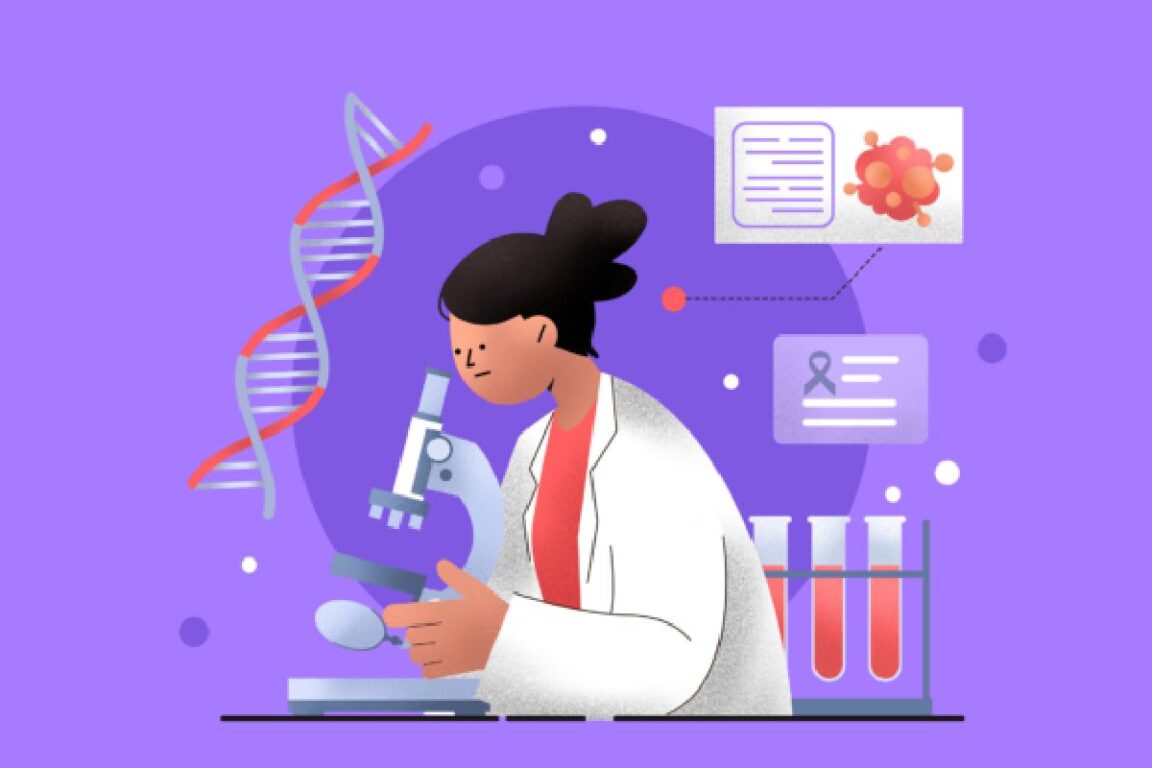
Cancer has always been a master of disguise. For decades, research treated tumors as a uniform mass. Scientists would grind up a sample. They would get an average reading. This method missed the critical truth.
Cancer is not a single entity. It is a chaotic ecosystem. It contains many different cell types. Some are aggressive. Others are dormant. Some resist treatment. Understanding this diversity is the new frontier.
A revolutionary technology is leading the charge. It is called single-cell omics. This approach analyzes individual cancer cells. It reveals their unique secrets. It is changing everything we know about the disease.

The Critical First Step
You cannot study a single cell with old tools. These cells are incredibly fragile. Their genetic material is scant. Scientists needed a new way to capture this data. The breakthrough came with a meticulous technical process.
Modern methods for single cell library preparation solved this problem. This technique isolates individual cells. It tags each cell’s genetic content with a unique molecular barcode.
Think of it as giving every single cell its own ID badge. This allows thousands of cells from one tumor to be analyzed together. Yet each cell’s data remains distinct. This step is the quiet, essential foundation for all the discoveries that follow.
Mapping the Tumor Universe
Imagine a strange, hostile city. Single-cell omics provides a detailed street map. It does not just show buildings. It reveals every resident’s occupation. Researchers can now catalogue every cell type within a tumor. They identify the malignant cancer cells. They also find the supporting stromal cells. So, they see the infiltrating immune soldiers.
The complexity is stunning. Two tumors might look identical under a microscope. Their single-cell maps can be wildly different. This detailed atlas is the first step toward smarter, targeted interventions.
Finding the Leaders of the Resistance
Treatment failure is a huge problem. A drug might work at first. Then the cancer returns. Single-cell omics explains why. It finds the rare, stubborn cells responsible. These are the therapy-resistant clones. They hide within the larger tumor population. Bulk sequencing would average them out. They would remain invisible.
Single-cell analysis spots them immediately. It identifies their unique genetic signatures. It shows how they evade drugs. Scientists can then design new strategies. These strategies specifically target these dangerous cell populations before they take over.
Decoding the Immune Conversation
Our immune system should fight cancer. Often, it fails. The tumor environment is to blame. Single-cell omics lets us listen to the conversation. It shows which immune cells are present.
More importantly, it reveals their state. Are the T-cells active and attacking? Or are they exhausted and shut down? What signals are the cancer cells sending to suppress them?
This detailed view is priceless. It helps explain why immunotherapies work for some patients but not others. It guides the development of next-generation treatments. These treatments aim to re-awaken a patient’s own immune defense.
Tracking the Enemy’s Evolution
Cancer is not static. It evolves over time. This is called clonal evolution. Single-cell technology acts as a time machine. It can track how a tumor changes.
Researchers take samples before treatment, during therapy, and after relapse. They create a family tree of the cancer cells. They see which genetic lineages die off. Also, they watch which ones survive and thrive under pressure.
This reveals the evolutionary pathways of resistance. It transforms our view of cancer from a static snapshot into a dynamic, unfolding story.
Towards Truly Personalized Medicine
Oncology is moving beyond one-size-fits-all. Single-cell data pushes this further. It allows for hyper-personalized treatment plans. A doctor could analyze the exact cellular makeup of a patient’s tumor. They could see its unique vulnerabilities. They could identify the specific immune cells available for mobilization.
This information could select the perfect drug combination. It could predict which therapy will fail. Medicine moves from targeting a generic disease to outmaneuvering a patient’s specific enemy.

The Challenges and the Horizon
This technology is not magic. It is complex and expensive. The data sets are enormous. Interpreting them requires new computational tools. But progress is swift. Costs are falling. Methods are improving.
The future is integration. Scientists will combine single-cell DNA, RNA, and protein data from the same cell. They will add spatial context, showing exactly where each cell sits in the tumor tissue. This multi-dimensional view will be transformative.
In Conclusion
Single-cell omics is more than a new tool. It is a new philosophy. It acknowledges cancer’s inherent complexity. However, It meets that complexity with unprecedented resolution. We are no longer fighting a shadowy monster. Also, we are mapping its territory. We are learning its language. We are identifying its leaders.
This detailed intelligence is our greatest weapon. It turns the fight against cancer into a strategic, informed campaign. One single cell at a time.